New Service Pack 25.002 for List & Label and the Report Server

The Service Pack 25.002 has some new features and various improvements for you. We give you an overview of what's new and what has improved.
The Service Pack 25.002 has some new features and various improvements for you. We give you an overview of what's new and what has improved.
The Service Pack introduces new features, various improvements and corrections. The following is an overview of the features and improvements in the Service Pack.

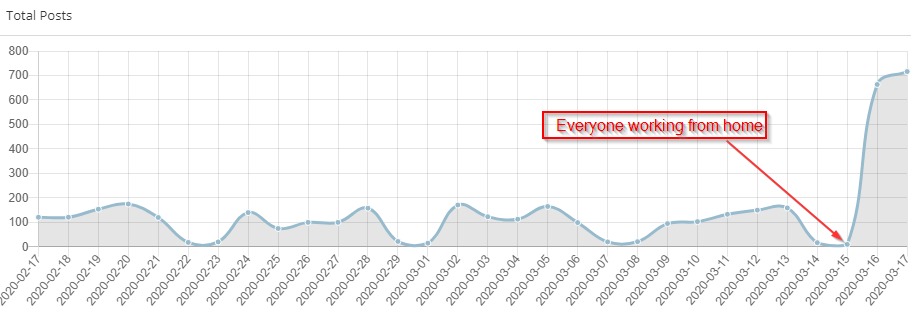
As we all are affected by the infamous COVID-19 outbreak I assume many of you are working from their home offices just as we do. We had the luck (aka foresight) to prepare this early on so we were up and running in less than a day. Nevertheless, once we started, there were a couple of challenges we were facing. I thought I'd share some nuggets here that might be useful to you.
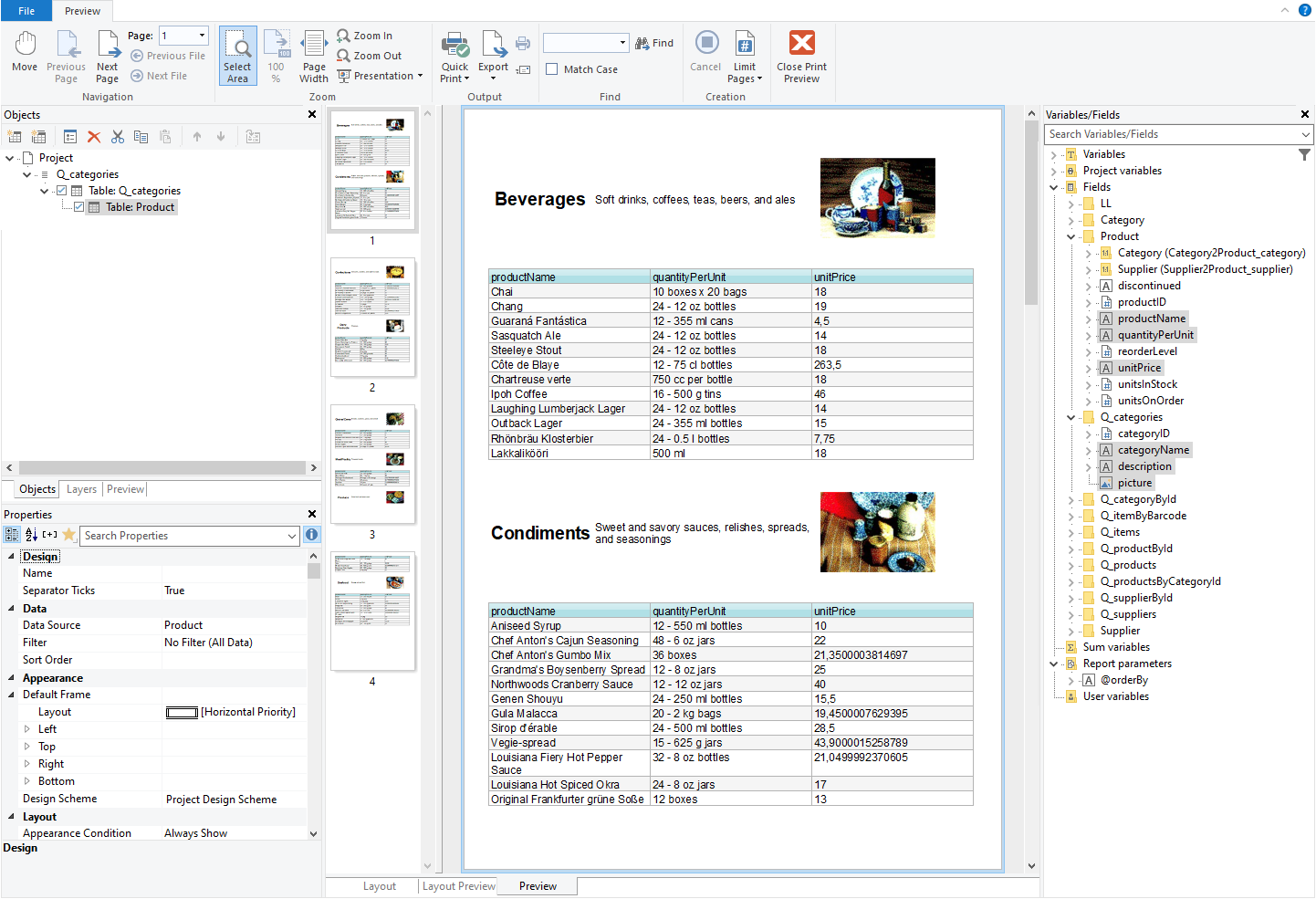
GraphQL was publicly released in 2015 and became quite popular since then. It's used by a number of big web applications like Instagram, Facebook and others.
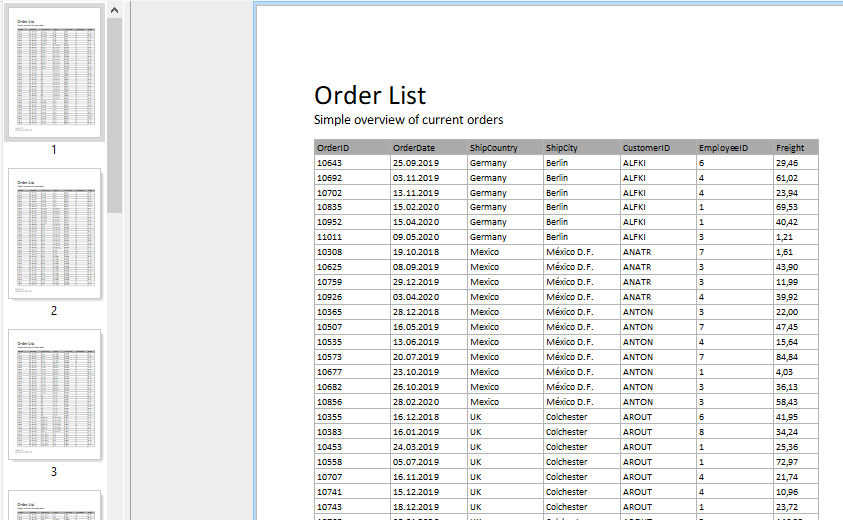
List & Label has supported a number of text based export formats for quite a while. You can have XML, CSV and layout TXT export in different variants. That way, you can use List & Label as a convenient way to convert your data from one of the supported data sources to something you can use in other applications again. But one very popular format was missing so far that's been around for quite a while: Java Script Object Notation aka JSON.

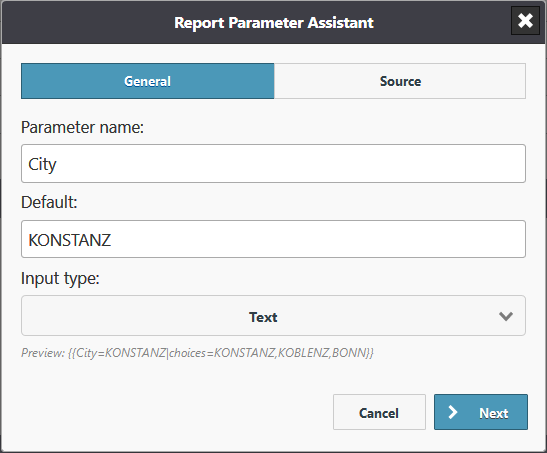
The combit Report Server celebrates its 5th birthday. Right on time for the anniversary, the product again has some new features to offer. We focused especially on the wishes of our customers.
This has been another great suggestion from our community at Idea Place. While the mail module is quite flexible and can send mails via SMTP, MAPI and XMAPI, and can either use the client's mail dialog or a custom, built in dialog, there was no way to append Outlook standard signatures to the sent mails so far. Microsoft has finally declined the request to add this feature to Outlook's MAPI implementation. So there was room for improvement.
Microsoft Flow allows you to define your own processes and workflows based on various triggers. More than 200 services such as Office 365, Facebook, WordPress etc. are available for this purpose, which can interact with each other in the workflows (called flows). These services offer actions as well as triggers, such as when a file is created (on Google Drive, DropBox or also on alternative services like e.g. box) or when a mail is received. Each flow has a trigger and may have multiple actions. This article describes how to connect combit Report Server to Microsoft Flow.
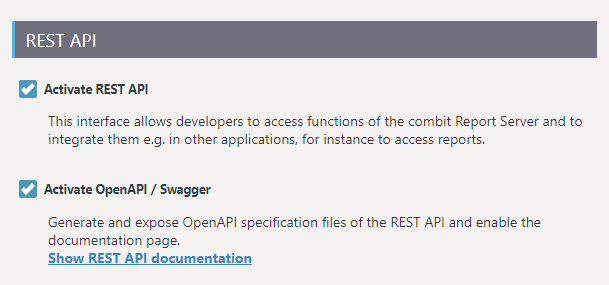
The OpenAPI Specification (OAS) defines a standard interface description for REST APIs, which allows both humans and computers to discover and understand the capabilities of a service without requiring access to source code, additional documentation, or inspection of network traffic.

While I've been blogging about the major and most-UI-visible features during the last few months, of course there are gazillions of minor and less visible changes underneath the hood in LL24. This blog post sums up some more reasons to be cheerful.
Here we post about new features in our reporting tool List & Label and about general development topics.
.NET Ad-hoc-Designer Angular API Azure Barcode Charts Cloud Components Cross Platform Data Provider Data Sources Debwin Delphi Designer Docker Drilldown Excel Export Filter FireDAC Java JSON Linux List & Label 29 List & Label 30 List & Label 31 Mail PDF Preview Print QR-Code React Report Container Report Parameters Reports Report Server REST Service Pack Tables VCL Visual Studio Web Reporting XRechnung ZUGFeRD
All news and tips from the Dev Blog and our Knowledgebase.

Don’t miss out on new features, service packs, how-tos and exclusive sales offers.
© 1989-2026 combit GmbH | All rights reserved | Legal Notice | Privacy Notes


